Know our Solar System Quiz
Know our Solar System Quiz
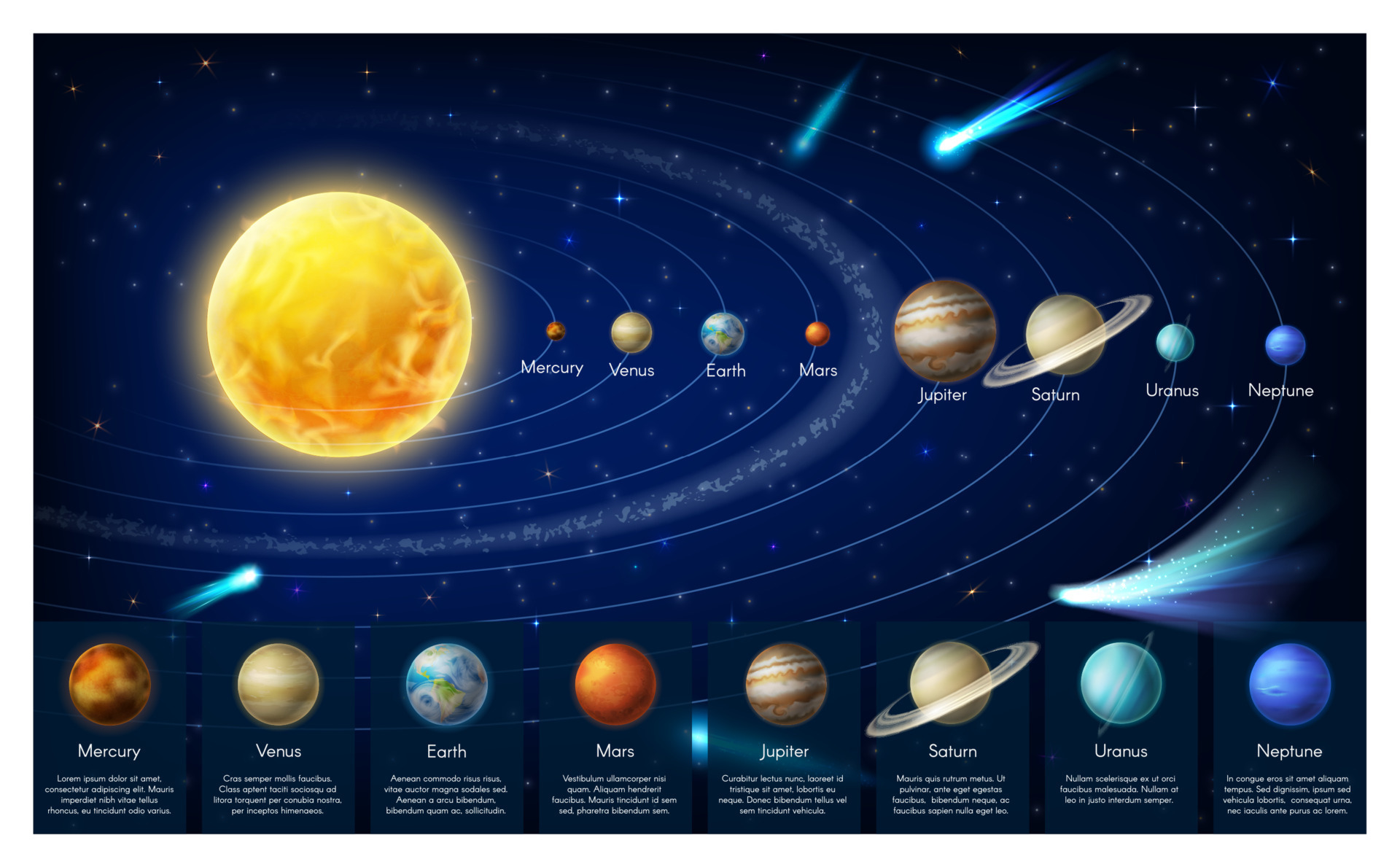
The Solar System is a vast collection of celestial bodies bound together by the Sun’s gravity. At its center is the Sun, a massive star that provides light and heat, enabling life on Earth. Orbiting the Sun are eight planets, ranging from rocky inner planets like Mercury, Venus, Earth, and Mars to the gas and ice giants—Jupiter, Saturn, Uranus, and Neptune. In addition to planets, the Solar System contains moons, dwarf planets such as Pluto, asteroids, comets, and meteoroids. The planets follow elliptical orbits, while smaller objects move in a variety of paths, creating a dynamic and interconnected system. Gravity governs the motions of all these objects, maintaining stability over billions of years. Studying the Solar System helps us understand planetary formation, the potential for life beyond Earth, and the broader workings of the universe.
Ready for the Quiz?
Please read the instructions below carefully before you begin. These rules ensure a fair and smooth experience.
Total Questions: 10
Each question has 4 options out of which only one option is correct. After attempting all the questions, click on Submit button to submit the response.
Once your responses are stored. You will be able to view the leaderboard of this quiz.