Quiz on Moons of Planets
Quiz on Moons of Planets
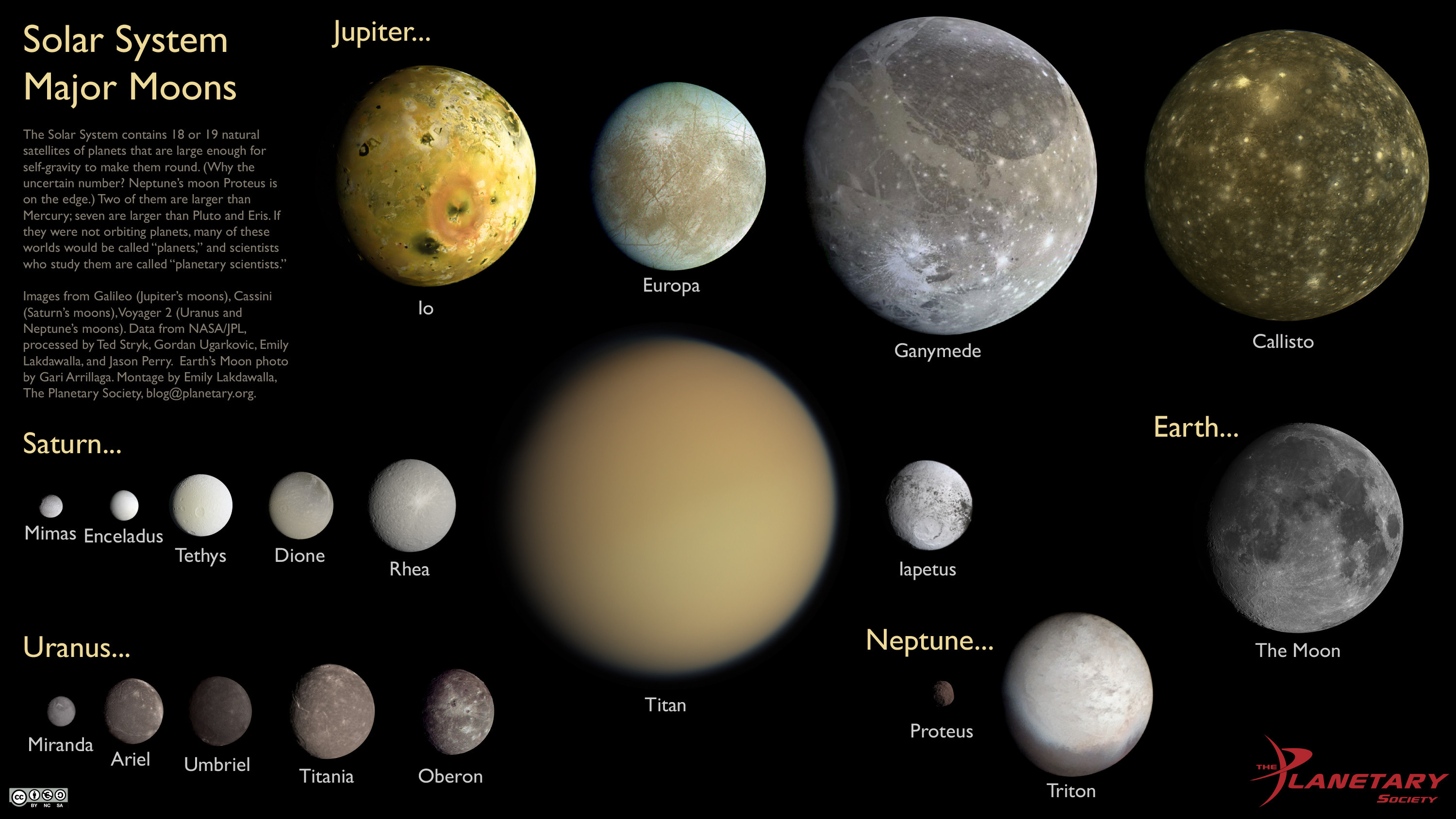
Moons, also known as natural satellites, are celestial bodies that orbit planets and other larger objects in space. They vary greatly in size, composition, and number across the Solar System. Earth has only one moon, simply called the Moon, which influences tides and stabilizes our planet’s tilt. Mars has two tiny moons—Phobos and Deimos—believed to be captured asteroids. The gas giants, such as Jupiter and Saturn, have many moons; Jupiter’s Ganymede is the largest moon in the Solar System, even bigger than Mercury, while Saturn’s Titan has a thick atmosphere and lakes of liquid methane. Some moons, like Europa and Enceladus, are thought to have underground oceans that might support life. Others, like Io, are volcanically active due to strong gravitational forces from their parent planets. The study of moons helps scientists understand how planets formed, evolved, and possibly how life might exist beyond Earth.
Ready for the Quiz?
Please read the instructions below carefully before you begin. These rules ensure a fair and smooth experience.
Total Questions: 10
Each question has 4 options out of which only one option is correct. After attempting all the questions, click on Submit button to submit the response.
Once your responses are stored. You will be able to view the leaderboard of this quiz.