Quiz on Potasium element
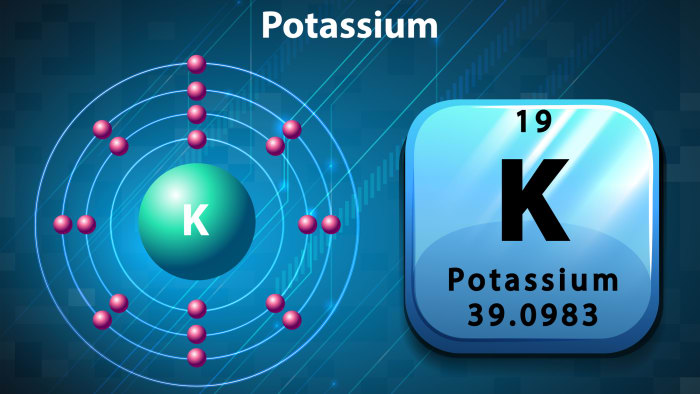
Potassium is a soft, silvery-white metal with the atomic number 19. It belongs to the alkali metal group in the periodic table. Potassium was discovered in 1807 by Sir Humphry Davy through the electrolysis of potash (potassium hydroxide). It is highly reactive, especially with water, where it produces potassium hydroxide and hydrogen gas, often igniting the hydrogen. Potassium is essential for plant growth and plays a vital role in nerve function and muscle contraction in humans. It is also used in fertilizers, soaps, and glass manufacturing.
- Total Question: 10
- Views: 142958 times
- Attempted: 0 times
- Published by : on 20-Oct-2025 12:52 am
MCQ Questions on Quiz on Potasium element
Q. What is the chemical symbol for Potassium?
A. Po
B. K
C. Pt
D. Pn
Correct: Option (B)
Q. What is the atomic number of Potassium?
A. 18
B. 19
C. 20
D. 21
Correct: Option (B)
Q. To which group does Potassium belong in the periodic table?
A. Alkaline earth metals
B. Transition metals
C. Alkali metals
D. Halogens
Correct: Option (C)
Q. Who discovered Potassium?
A. Dmitri Mendeleev
B. Carl Wilhelm Scheele
C. Sir Humphry Davy
D. Marie Curie
Correct: Option (C)
Q. In which year was Potassium discovered?
A. 1774
B. 1807
C. 1894
D. 1820
Correct: Option (B)
Q. What happens when Potassium reacts with water?
A. It forms hydrogen peroxide
B. It forms potassium hydroxide and hydrogen gas
C. It releases carbon dioxide
D. It forms sodium chloride
Correct: Option (B)
Q. What is one major use of Potassium?
A. Fuel for rockets
B. Fertilizers
C. Jewelry making
D. Plastic production
Correct: Option (B)
Q. What is the physical state of Potassium at room temperature?
A. Solid
B. Liquid
C. Gas
D. Plasma
Correct: Option (A)
Q. Why is Potassium essential for the human body?
A. It helps build bones
B. It regulates nerve and muscle function
C. It helps in blood clotting
D. It aids in digestion
Correct: Option (B)
Q. What compound is formed when Potassium reacts with oxygen?
A. Potassium oxide
B. Potassium hydroxide
C. Potassium carbonate
D. Potassium chloride
Correct: Option (A)